
.webp)
When selecting a suitcase, most people focus on the shell material, color, or brand. But for frequent travelers and luggage manufacturers, the most critical component is often overlooked: the luggage wheels.
A poor-quality caster wheel system can ruin an otherwise perfect bag. It’s the difference between gliding effortlessly through a terminal and wrestling with a wobbly, unstable case.
This guide will help you, whether you’re a traveler buying a new suitcase or an OEM buyer sourcing reliable luggage wheels, understand the key factors that define quality and performance.
Why Luggage Wheels Are The Most Important Feature
Luggage wheels are the primary point of contact between your bag and the ground. They bear the entire weight and endure constant friction, shocks from curbs, and exposure to elements. High-quality caster wheels ensure:
- Effortless Maneuverability: Smooth navigation through airports, hotels, and streets.
- Durability: Resistance to cracking, splitting, and wearing down.
- Quiet Operation: A smooth, silent roll instead of a loud, annoying rumble.
- Overall Longevity: Protecting the suitcase’s axle and chassis from damage.
The Two Main Types of Luggage Wheels: Spinner vs. Inline
The first decision is choosing the rotation style. Each has distinct advantages.
Spinner Wheels (Double Swivel Casters)
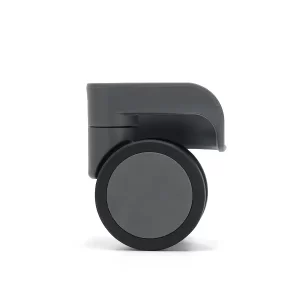
- Design: Two wheels mounted on a single fork that allows 360-degree rotation.
- Pros: Superior maneuverability. You can push the suitcase sideways, forwards, or backwards with minimal effort. It rotates on the spot, ideal for crowded spaces.
- Cons: Slightly less stable at high speeds or on uneven surfaces. It can be more prone to wobble if the quality is low.
- Best For: Airport travel, smooth surfaces, and anyone who values easy handling. Most modern suitcases use this design.
Inline Wheels (Fixed Frame Wheels)
- Design: Two fixed wheels in a skate-style configuration.
- Pros: Excellent stability in a straight line and at high speeds. Often more robust.
- Cons: Limited to forward and backward movement. You must tilt the bag to roll it, bearing some of the weight yourself.
- Best For: Rugged travel, uneven sidewalks, and older suitcase designs.
- Verdict: For most modern applications, 360-degree spinner wheels are the industry standard due to their user-friendly design.
Key Factors to Consider When Choosing Luggage Wheels
Wheel Material: The Foundation of Durability
The material determines noise, weight, and wear resistance.
- TPU (Thermoplastic Polyurethane) / PU (Polyurethane): The premium choice. Offers an excellent balance of durability, quiet operation, and shock absorption. High-quality TPU luggage wheels resist cracking in cold temperatures and leave no black marks on floors.
- PVC (Polyvinyl Chloride) / Plastic: A harder, often noisier, and less durable material. Lower-cost PVC wheels can crack easily and wear down quickly, especially on rough surfaces. Avoid for heavy-duty use.
- Rubber: Excellent grip and shock absorption, but it is heavier and can mark floors. Less common on modern luggage.
Wheel Size and Width
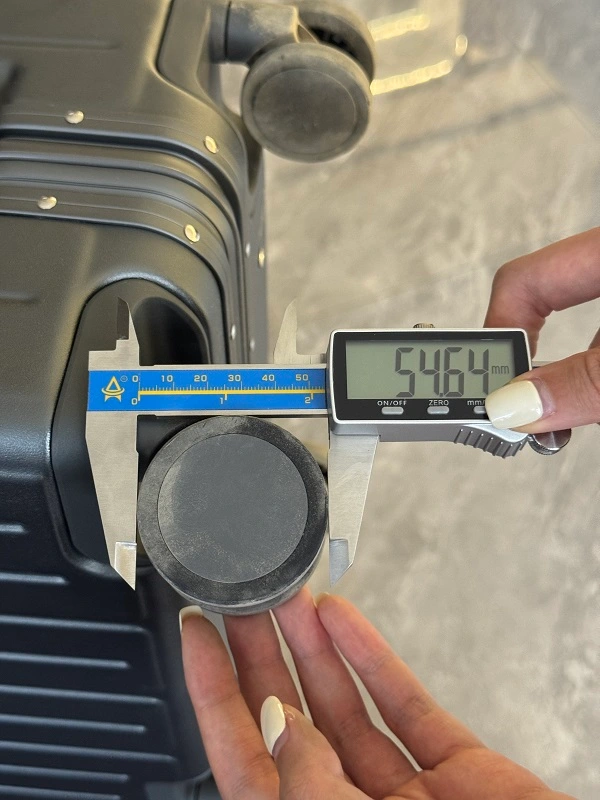
- Larger Wheels (> 55 mm): Better for overcoming obstacles like curb drops, carpet edges, and cracked pavements. They offer a smoother roll and are essential for heavy-duty luggage wheels.
- Smaller Wheels (< 50 mm): Lighter and more compact, but struggle with obstacles. Best for lightweight bags and primarily smooth surfaces.
The Hub and Bearing System
This is the internal mechanism that allows the wheel to spin freely.
- Simple Plastic Bushings: Low-cost option found in cheap luggage. Prone to friction, noise, and failure.
- Ball Bearings (e.g., ABEC-1 or ABEC-3 rated): The standard for quality luggage casters. They provide a smoother, quieter, and more reliable roll. The higher the ABEC rating, the tighter the tolerance and better the performance—essential for OEM luggage wheels that need to pass rigorous tests.
The Fork (Wheel Housing)
The fork holds the wheel and attaches to the suitcase chassis.
- Material: Must be made from reinforced, impact-resistant nylon or polypropylene. A weak fork will bend or break.
- Design: A robust fork with metal reinforcement is crucial for supporting weight and absorbing shock.
Advanced Feature: Brake Lock Luggage Wheels
A revolutionary feature for travelers and a key differentiator for luggage manufacturers is the brake locking system. A mechanism (often a push-button or slide-lock) that engages a brake on one or more wheels. It prevents the suitcase from rolling away on inclines (train aisles, airport slopes, hotel lobbies). This is a major value-added feature.
For OEM Buyers and Manufacturers:Sourcing Quality Wheels
As a B2B buyer, you need to specify more than just appearance. Please ask your luggage wheel supplier to provide their production standards, such as the following items:
1. Test Standards: Ensure wheels pass key industry tests
- Cobblestone Test: 10+ km on a cobblestone track to simulate years of wear.
- Drop Test: From a specified height to test shock absorption.
- Load Capacity: Specify the weight rating per wheel (e.g., 25 kg per wheel for a total of 50 kg for a 2-wheel system).
2. Certifications: Request material safety certifications (e.g., REACH, RoHS) if required for your target market.
3. Customization: Can the supplier provide custom branding, colors, or specific thread sizes (M6, M8) to match your chassis?

Conclusion: Rolling Forward with Confidence
Choosing the right luggage wheels is a decision based on performance and durability. Prioritize high-quality TPU spinner wheels with a reliable bearing system for the best user experience.
For OEM buyers, wholesalers, and luggage manufacturers, partnering with a supplier that provides detailed technical specifications, rigorous quality testing, and customizability is paramount. It ensures your final product stands up to real-world use and builds a reputation for reliability.
Are you a luggage manufacturer or distributor looking for a reliable supplier of high-performance, custom luggage wheels?
[Contact Us Today] for a free consultation and request our full catalog and technical specification sheets. Let us help you build a better suitcase.
Send us a inquiry